Know your model & pricing tiers
Which brain you're using is mostly a function of what you pay — so pick deliberately.
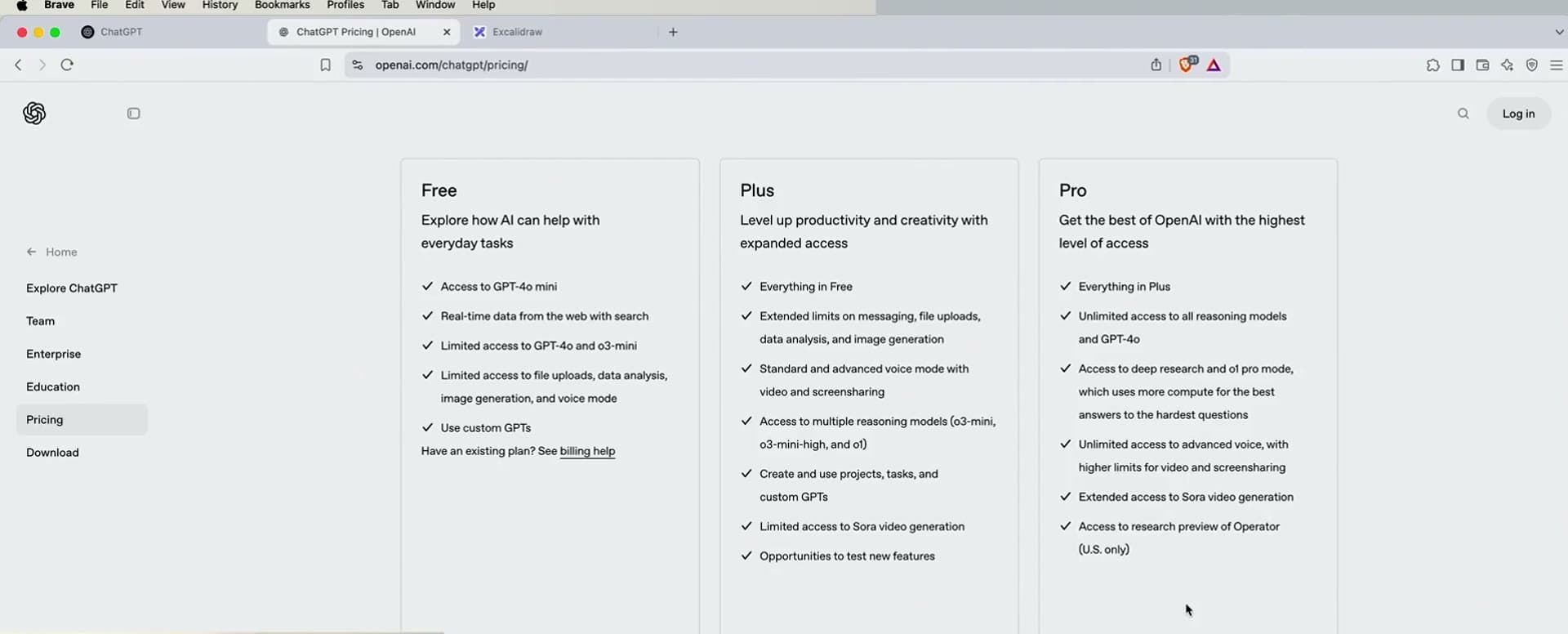
There isn't "an LLM." There's a ladder of models per provider, and the tier you pay for silently decides which brain answers you. Bigger models cost more to run, so they cost more to use — but they're smarter, more knowledgeable, and hallucinate less. Know which rung you're on, and for anything that matters, climb it. Then, because each provider has quirks, ask several — the "LLM council."
Top-left of every app is a model selector. Logged out, you may be handed a smaller, "dumber" model without being told. So the first habit is simply: know what you're using.
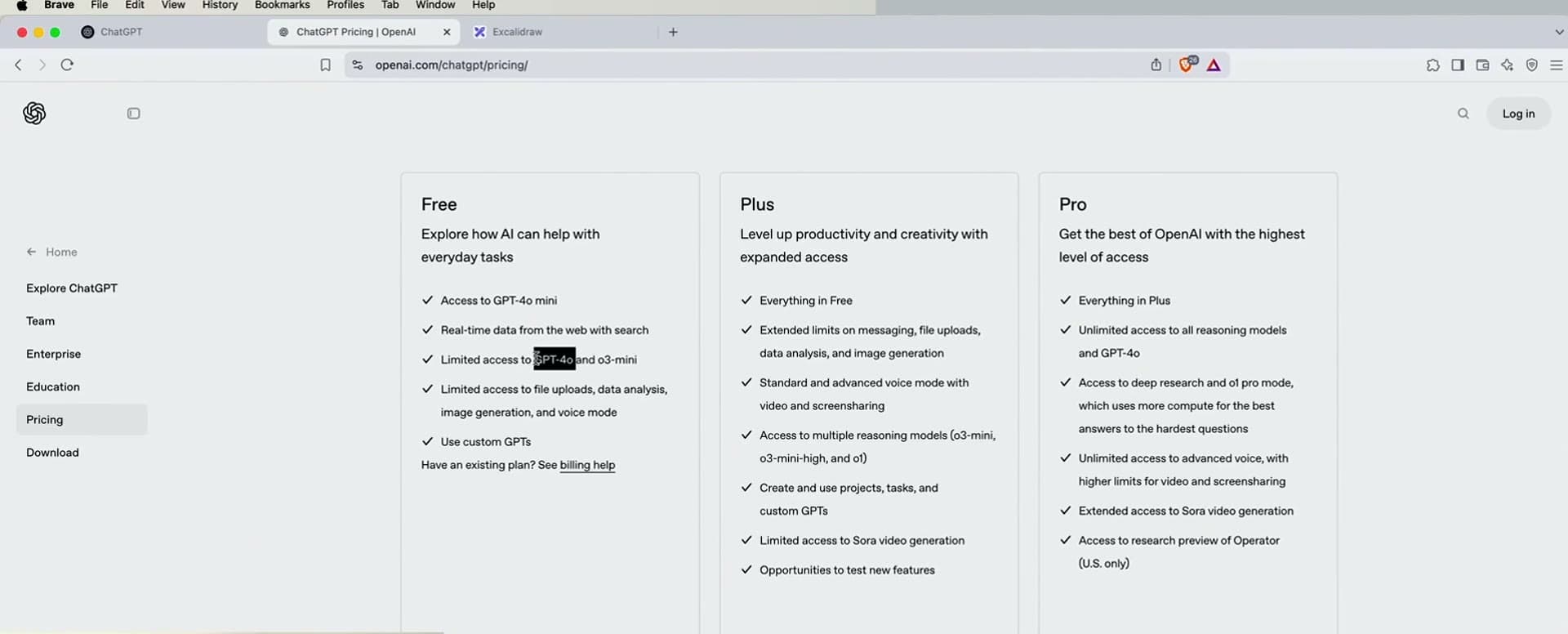
Larger models have "a lot more world knowledge," better and more creative writing, and hallucinate less. Smaller ones are cheaper and faster but "not going to be as creative… will make mistakes." Match the model to the stakes of your task.
This ladder repeats everywhere: Claude (Haiku → Sonnet → …), Gemini (Flash → Pro), Grok (2 → 3). Don't ask Grok 2 what Grok 3 could answer. Pay enough to reach the top rung for the work you actually do.
“I kind of refer to all these models as my LLM council… If I'm trying to figure out where to go on a vacation, I will ask all of them.”
Andrej Karpathy·15:58
The load-bearing points
- The pricing tier chooses your model — often invisibly.
- Bigger models: more knowledge, better writing, fewer hallucinations, higher cost.
- For real work, pay for the top rung; for trivia, the cheap rung is fine.
- Consult an LLM council — ask Claude, Gemini, Grok the same thing.
Find your rung
Open your main app and check the model selector. What exact model is answering you right now? Is it the flagship or a mini?
Show the point
Logged-out or free tiers often hide this. If you can't tell, assume you're on a smaller model.
Convene a council
Take one open-ended question (travel, a book pick, a naming decision) and ask three different providers. Compare tone, specificity, and where they agree.
Show the point
Agreement across independent models is a decent confidence signal; divergence tells you where to dig.
Asking the same question across several providers/models. Each has different strengths, tools, and blind spots, so triangulating their answers raises your confidence and surfaces disagreements worth investigating.