Have it make images
Generate images from a prompt — handy, but usually a separate model bolted on.
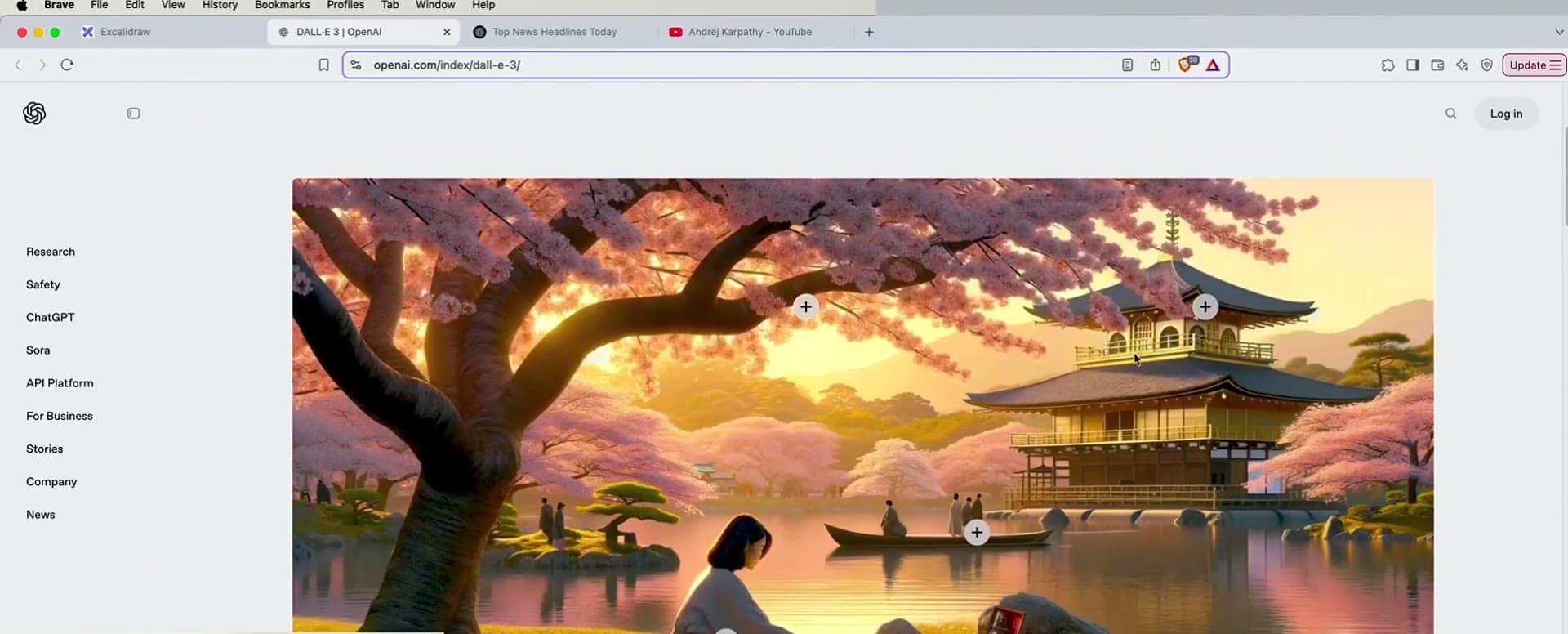
The output side of vision: describe an image and get one back (DALL·E, Ideogram, and others). Useful, but note the architecture — image generation is often a separate model tacked on, communicating with the language model via text, rather than the LLM painting natively. Karpathy doesn't lean on it much ("I'm not in a creative profession"), but it's easy and fun.
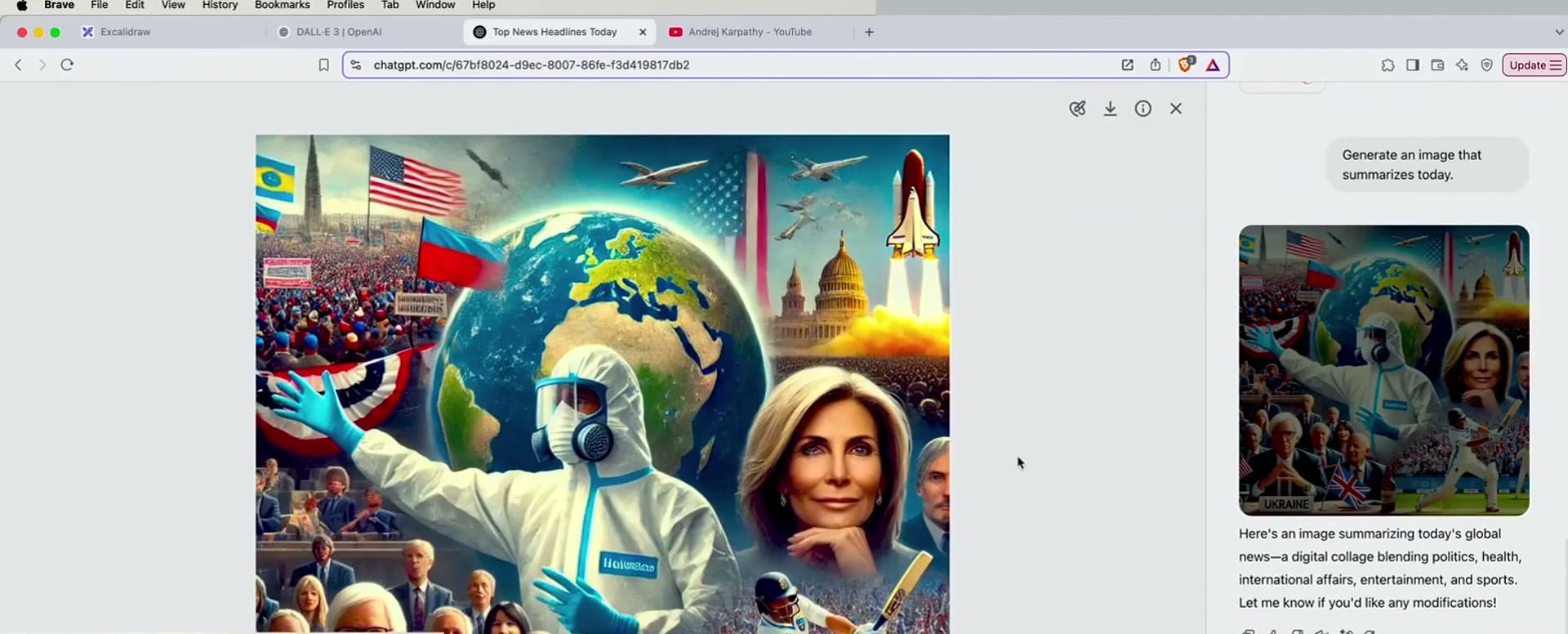
A neat trick he shows: "generate an image that summarizes today" — the model takes what it knows about the day (from memory or the chat) and hands a prompt to the image model.
Most image generation is a separate model the LLM calls with a text prompt — the same native-vs-glued-on distinction from voice. That's why the LLM sometimes can't finely control or “see” exactly what came back.
The load-bearing points
- Describe → get an image (DALL·E, Ideogram, …).
- Often a separate model driven by a text prompt, not native painting.
- Fun/handy; not something Karpathy relies on heavily.
Summarize today, visually
Ask your app to “generate an image that summarizes today,” letting it draw on the chat or your memory.
Show the point
Watch how it writes a text prompt for the image model — that hand-off is the “tacked-on” architecture.
Usually tacked-on: a separate image model the LLM calls with a text prompt, rather than the language model generating pixels natively. (Contrast with Advanced Voice, which is native audio.)